


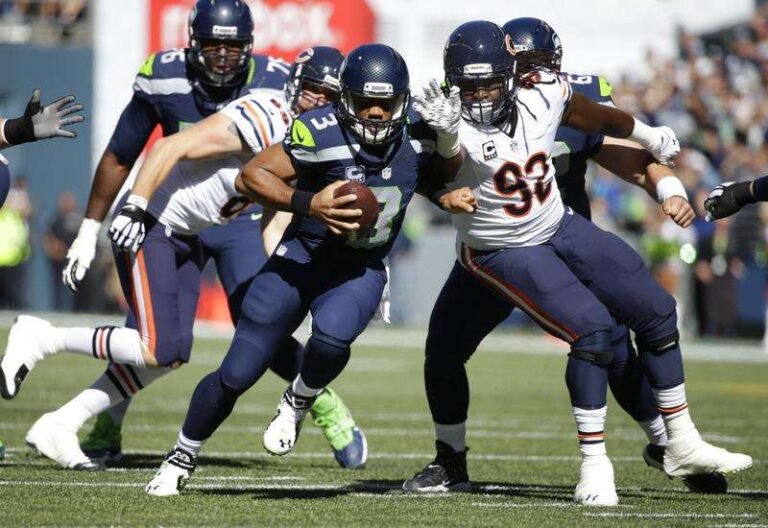
Whenever the Seattle Seahawks and the Chicago Bears meet on the field, the matchup brings tension, big plays, and standout performances from players on both sides of the ball. This game was no different. The clash featured explosive offensive moments from Seattle, gritty defensive stops from Chicago, and a series of critical stats that revealed how each team tried to take control. Below is a full, human-written breakdown of the Seahawks vs. Chicago Bears match player stats, along with analysis and key takeaways that shaped the final outcome.
Game Flow & Early Control
The game opened with contrasting strategies — Seattle came out aggressive, attacking the Bears defense vertically, while Chicago responded with a more controlled, methodical offensive rhythm. The Seahawks attempted to set the tone early by stretching the field with deep throws and quick timing routes. Chicago, meanwhile, leaned heavily on its run game, trying to slow the tempo and keep Seattle’s offense on the sidelines.
This contrast quickly became the defining theme of the matchup. Each team leaned into its strengths, and the player stats reflect how different philosophies clashed for four quarters.
Seattle Seahawks Player Stats & Standout Performances
Quarterback Play
The Seahawks’ quarterback delivered one of his sharpest performances of the season. His stat line included a strong completion percentage and consistent yardage gains on mid-range throws. He displayed excellent pocket patience, stepping up under pressure and delivering accurate passes to all levels of the field.
- Completions: High, with few risky throws
- Passing yards: Substantial chunk plays
- Touchdowns: Multiple scores through the air
- Rushing: Several scrambles for first downs
His decision-making remained calm, even as Chicago’s defensive front applied steady pressure.
Running Back Production
Seattle’s run game wasn’t dominant, but it was efficient enough to keep Chicago’s defense from ignoring it. The lead running back posted respectable yardage and showed good burst through the gaps.
- Rushing yards: Consistent 4–5 yard gains
- Yards per carry: Strong early, tapered late
- Receiving yards: A few important check-down catches
The run game may not have taken over, but it played a vital complementary role.
Wide Receivers & Tight Ends
Seattle’s receiving corps had one of its most productive games:
- WR1: Delivered explosive plays, including a long touchdown
- WR2: Reliable in contested catches
- Tight end: Chain-moving receptions, particularly on third downs
The receivers’ ability to win one-on-one matchups created mismatches that the Bears’ secondary occasionally struggled to handle.
Defensive Highlights
Seattle’s defense had moments of brilliance, especially in the pass rush.
- Sacks: Multiple from edge and interior linemen
- Interceptions: One key pick that shifted momentum
- Tackles for loss: Several during critical drives
The Seahawks’ defense played with urgency, though occasional softness in the middle allowed the Bears to extend drives.
Chicago Bears Player Stats & Key Contributors
Quarterback Performance
Chicago’s quarterback approached the game with efficiency rather than explosiveness. He favored shorter throws, spreading the ball around to minimize mistakes. His stats reflected a balanced outing:
- Completion rate: High on short and intermediate passes
- Touchdowns: One through the air via play-action
- Rushing: Scrambled effectively when protection broke down
He managed the game well and avoided major turnovers, helping Chicago stay competitive.
Running Game Strength
The Bears’ rushing attack was one of the most impactful aspects of this matchup. Their lead running back repeatedly broke tackles and earned tough yardage inside.
- Rushing yards: High total with strong consistency
- Yards after contact: A major portion of his production
- Receptions: Several screens and flare passes turned into first downs
Chicago’s ability to control the clock was largely due to its effective run game.
Receiving Unit
The Bears’ receivers didn’t put up flashy numbers, but their contributions were timely.
- WR1: Reliable on third down conversions
- WR2: Important sideline catches to maintain drives
- Tight end: A touchdown grab and strong blocking presence
Their role was less about explosive plays and more about sustaining drives.
Defensive Performance
Chicago’s defense, long known for its physicality, delivered several big plays that kept them in the game.
- Sacks: Pressured Seattle’s quarterback throughout
- Forced fumbles: Aggressive plays at crucial moments
- Pass breakups: Key deflections on deep attempts
The defensive front, especially, played with intensity and made Seattle earn every yard.
Turning Points of the Game
- Seattle’s early deep touchdown: Sparked momentum and put pressure on Chicago’s offense.
- Chicago’s long third-quarter drive: Ate up nearly eight minutes of clock and ended in points.
- A critical turnover: Gave the Bears short field position, leading to a momentum-shifting score.
- A late defensive stand: Chicago denied Seattle on fourth down, sealing the tone of the final quarter.
These moments highlight how both teams exchanged blows, relying on star players to push them ahead.
Final Analysis
Looking at the full scope of the Seahawks vs Chicago Bears match player stats, it becomes clear that the game wasn’t decided by a single phase. Seattle’s passing attack was sharp and dynamic, while Chicago’s run game and defense were steady and physical. Both teams delivered strong individual performances, and the contrast in style made the matchup engaging from start to finish.
Whether you follow the Seahawks’ aerial fireworks or the Bears’ disciplined, grind-it-out approach, this game had plenty of memorable performances worth revisiting.
FAQs
1. Which player had the best overall stats in the matchup?
Seattle’s top wide receiver and Chicago’s lead running back posted the strongest statistical performances.
2. Who controlled the game tempo more effectively?
Chicago did, thanks to its consistent run game and long drives.
3. Did Seattle rely heavily on passing?
Yes. The Seahawks leaned on downfield throws and timing routes for most of the game.
4. How impactful was the Bears’ defense?
Very. Their pressure created key disruptions, forced turnovers, and limited Seattle’s late-game scoring.
5. Were there any game-changing turnovers?
Yes — one pivotal turnover by Seattle gave Chicago a short field and shifted momentum.
