


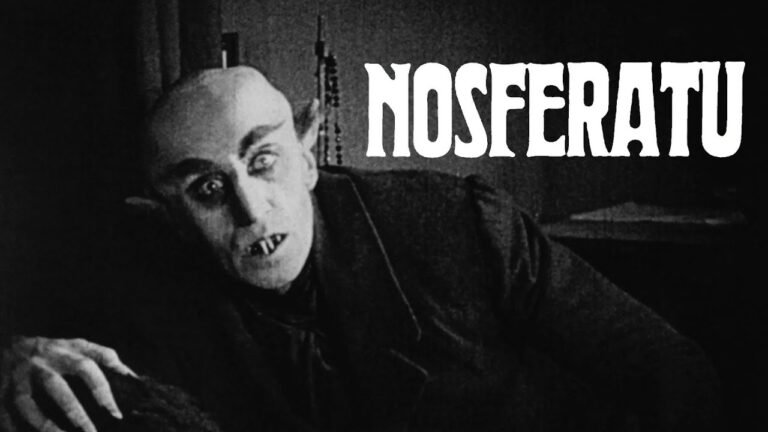
Few names in horror cinema carry as much weight as Nosferatu. Instantly recognizable by his elongated fingers, bald head, and haunting silhouette, Nosferatu is more than just a vampire—he is an enduring symbol of fear, death, and the uncanny. Long before vampires were romanticized in modern culture, Nosferatu represented the pure essence of horror: a creature of darkness that inspires dread at the most basic, human level.
The Origins of Nosferatu
The word “Nosferatu” is often thought to come from Romanian or Eastern European folklore, where it was associated with the undead or vampires. Scholars still debate the exact origins of the term, with some claiming it may have been a misinterpretation of a Romanian word for “plague” or “unclean spirit.” Whatever its linguistic roots, the name became immortal through cinema.
Nosferatu first appeared on the silver screen in 1922, in the silent German Expressionist film Nosferatu: A Symphony of Horror, directed by F. W. Murnau. The character, Count Orlok, was an unofficial adaptation of Bram Stoker’s Dracula. Since the filmmakers did not secure the rights to Stoker’s novel, they changed names and locations, but the resemblance was clear. Unlike the suave, aristocratic Dracula of later interpretations, Orlok was terrifyingly monstrous. His skeletal frame, rat-like features, and predatory presence created a figure that audiences would not forget.
Nosferatu and the Evolution of Horror
Nosferatu was groundbreaking in its time. The film employed expressionist techniques, using shadows, distorted sets, and unnatural angles to convey fear visually. One of the most iconic images in film history is Orlok’s shadow creeping up the staircase—a scene so unnerving that it remains influential to this day.
The character’s design emphasized disease, death, and decay rather than romance or charm. In fact, Nosferatu’s association with plague and pestilence added a real-world layer of fear, tapping into anxieties about illness and mortality. In many ways, Nosferatu represents horror at its most primal: a direct confrontation with death that leaves no room for comfort or empathy.
Nosferatu also introduced several tropes that would define vampire lore in cinema:
- Vulnerability to sunlight, which destroys him.
- Supernatural abilities, such as superhuman strength and speed.
- The ability to spread disease, aligning the vampire with human fears of contagion.
These elements have become staples in vampire storytelling, influencing countless films, books, and television series over the next century.
Nosferatu vs. Modern Vampires
When we think of vampires today—elegant, charismatic, and sometimes romanticized—Nosferatu stands in stark contrast. He is ugly, predatory, and terrifying. This difference highlights how the vampire myth evolved: from creatures of plague and horror to symbols of desire, immortality, and forbidden romance.
Yet, Nosferatu continues to inspire filmmakers and writers who wish to return to a purer form of horror. Directors often reference Orlok’s eerie physicality, slow, deliberate movements, and silent menace when crafting villains that are unsettling rather than seductive. In an age of flashy CGI monsters, Nosferatu’s power lies in atmosphere, subtlety, and the unknown—qualities that remain timeless in horror.
Why Nosferatu Still Matters
Over a century later, Nosferatu remains culturally relevant for several reasons:
- Historical Significance: It was one of the earliest horror films, shaping cinematic techniques for decades.
- Unique Horror Aesthetic: The combination of shadow, music, and performance created a haunting experience that still influences visual storytelling.
- Symbolic Depth: Nosferatu embodies universal fears—disease, death, and the uncanny—that remain relevant today.
- Artistic Innovation: The film showcased creative cinematography and set design that went beyond mere storytelling, turning film into a medium of psychological horror.
Nosferatu reminds us that horror does not rely solely on gore or shock; it thrives on imagination, tension, and the unseen.
FAQs About Nosferatu
What is Nosferatu?
Nosferatu is a fictional vampire created for the 1922 silent film Nosferatu: A Symphony of Horror. The character, Count Orlok, was inspired by Bram Stoker’s Dracula.
Is Nosferatu based on Dracula?
Yes. Nosferatu is essentially an unofficial adaptation of Dracula. The filmmakers changed names and some details to avoid copyright issues, but the core story and vampire archetype remain closely related.
Why does Nosferatu look so different from other vampires?
Nosferatu was designed to be frightening rather than charming. His skeletal frame, elongated fingers, and rat-like features emphasize decay, disease, and death—unlike the romanticized vampires of modern media.
What is the origin of the word “Nosferatu”?
The term likely comes from Eastern European folklore and was used to describe an undead creature. Its exact linguistic roots are debated, but it became globally famous because of the 1922 film.
Why is Nosferatu important in film history?
Nosferatu helped define horror cinema. Its use of shadows, camera angles, and atmospheric storytelling set new standards for suspense and terror in movies.
Are there modern adaptations of Nosferatu?
Yes. There have been several remakes, reinterpretations, and homages, both in film and literature, demonstrating the character’s lasting influence on horror culture.
Nosferatu is more than a vampire; he is a symbol of fear, mortality, and cinematic innovation. While modern vampires may seduce or charm, Nosferatu continues to haunt our imagination with the raw, unfiltered terror of the unknown. For horror enthusiasts, film historians, and casual viewers alike, Nosferatu remains an essential icon of the macabre—a timeless reminder that true horror comes from what we cannot control or understand.
