


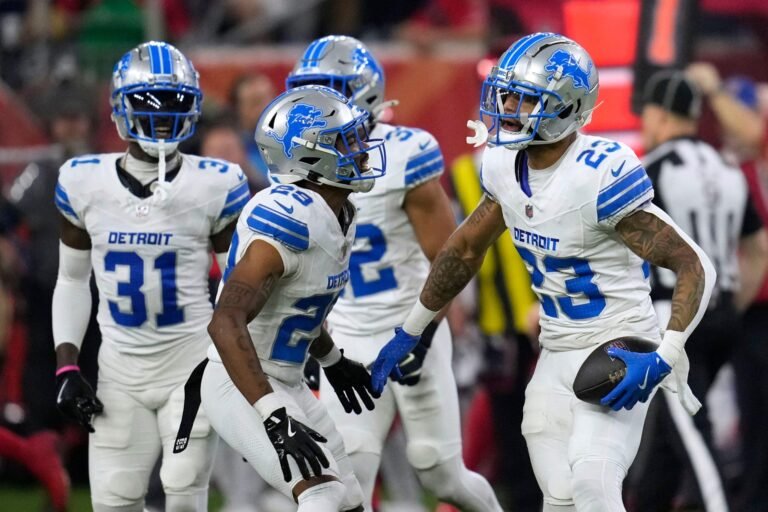
The matchup between the Detroit Lions and the Houston Texans has often been a showcase of individual talent and strategic execution. Over their most recent encounters, both teams have displayed a mix of explosive offensive plays and resilient defensive efforts. Examining player stats from these games provides valuable insight into how each team functions under pressure and which players make the most impact.
Detroit Lions’ Offensive Performance
In the latest clash, the Lions’ offense relied heavily on their passing game, led by quarterback Jared Goff. Goff completed 15 of 30 passes for 240 yards, throwing two touchdowns but also turning the ball over five times through interceptions. Despite these mistakes, Goff’s ability to connect on critical third downs kept the Lions in contention throughout the game. His short and intermediate passing game allowed the Lions to sustain drives and control possession at key moments.
The Lions’ rushing attack was spearheaded by Jahmyr Gibbs, who carried the ball 19 times for 71 yards. Gibbs’ versatility as both a runner and a receiver out of the backfield made him a difficult matchup for the Texans’ defense. Complementing Gibbs was David Montgomery, who added 32 yards on 12 carries and managed to punch in a rushing touchdown. Together, Gibbs and Montgomery provided balance to Detroit’s offense, preventing Houston from focusing solely on stopping the pass.
Wide receiver Sam LaPorta was the primary target for Goff, catching three passes for 66 yards and a touchdown. Amon-Ra St. Brown also contributed significantly, hauling in six receptions for 60 yards. Their ability to find soft spots in Houston’s zone defense helped keep drives alive and provided reliable options for Goff when under pressure.
Houston Texans’ Offensive Efforts
On the other side, the Texans relied on quarterback C.J. Stroud, who threw for 232 yards, completing several key passes for first downs and one touchdown. However, two interceptions hampered Houston’s chances to maintain momentum. Stroud’s performance highlighted both his accuracy and his need to better manage risk in high-pressure situations.
Running back Joe Mixon carried the ball 25 times for 46 yards and scored a rushing touchdown. While Mixon’s yardage was limited, his presence in short-yardage and goal-line situations proved critical for Houston’s scoring efforts. Wide receiver John Metchie III led the team in receiving yards with five catches for 74 yards, demonstrating his ability to create separation and gain yards after the catch.
Houston’s offensive strategy attempted to exploit Detroit’s secondary, but penalties and missed opportunities at critical moments prevented the team from converting yardage into points consistently.
Defensive Highlights
Defense played a decisive role in the Lions vs Texans matchup. For Detroit, Carlton Davis III made a significant impact with two interceptions and four tackles. His ability to read Stroud’s passes and position himself effectively disrupted Houston’s rhythm and gave the Lions extra possessions, which ultimately contributed to their victory.
On Houston’s side, the defensive unit applied pressure on Goff but struggled to contain the Lions’ balanced offensive attack. Despite their efforts, turnovers and missed tackles allowed Detroit to sustain drives and capitalize on scoring opportunities.
Special Teams Contributions
Special teams were crucial in deciding the outcome of the game. Lions kicker Jake Bates nailed a 58-yard field goal to tie the game and later hit a dramatic 52-yard field goal to win it as time expired. His composure under pressure exemplified the importance of reliable kicking in tight games.
Houston’s kicker also contributed with long-distance field goals, but without consistent offensive support, the Texans were unable to close the gap late in the game.
Player Comparisons
When comparing individual performances, Detroit’s offensive balance, strong receiving corps, and reliable rushing attack gave them an edge. Goff may have thrown multiple interceptions, but his ability to execute key passes under pressure, supported by LaPorta and St. Brown, allowed Detroit to sustain scoring drives. Gibbs and Montgomery provided a multi-dimensional rushing attack that kept Houston’s defense guessing.
For Houston, Stroud’s arm strength and Mixon’s rushing presence kept the game competitive, but turnovers and inconsistent execution in critical moments cost them. Metchie’s receiving performance was a bright spot, but the Texans’ lack of complementary play from other skill positions limited their scoring potential.
Key Takeaways
- Detroit’s balanced offense: The Lions effectively combined passing and rushing to control the game’s tempo.
- Critical turnovers: Goff’s interceptions were costly, but Houston’s mistakes were equally damaging.
- Defensive impact: Carlton Davis III’s interceptions and defensive awareness played a decisive role in Detroit’s win.
- Special teams as game-changer: Jake Bates’ long field goals demonstrated the influence of special teams in close contests.
- Houston’s missed opportunities: Despite strong individual stats from Stroud, Mixon, and Metchie, the Texans failed to capitalize on scoring chances.
FAQs
Q1: Who led the Lions in rushing yards?
A1: Jahmyr Gibbs led Detroit with 71 rushing yards on 19 carries.
Q2: How many touchdown passes did Jared Goff throw?
A2: Goff threw two touchdown passes in the game.
Q3: Which Texans player had the most receiving yards?
A3: John Metchie III caught five passes for 74 yards, leading Houston in receiving.
Q4: How did the Lions’ defense perform?
A4: Carlton Davis III stood out with two interceptions, and the Lions’ defense as a whole created turnovers that shifted momentum.
Q5: Did special teams influence the outcome?
A5: Yes, Jake Bates’ long field goals were decisive, including a game-winner in the final seconds.
Q6: Who were the key contributors on the Texans’ side?
A6: Stroud, Mixon, and Metchie were the primary contributors, but turnovers and missed opportunities limited their impact.
The Lions vs Texans matchup demonstrates that football is a team game where individual stats matter, but timely execution and situational awareness often decide the winner. Detroit’s balanced offense, opportunistic defense, and clutch special teams were the key ingredients that tipped the scales in their favor. Meanwhile, Houston’s players showed talent and potential, but a combination of turnovers and inconsistent execution prevented them from securing the win.
