


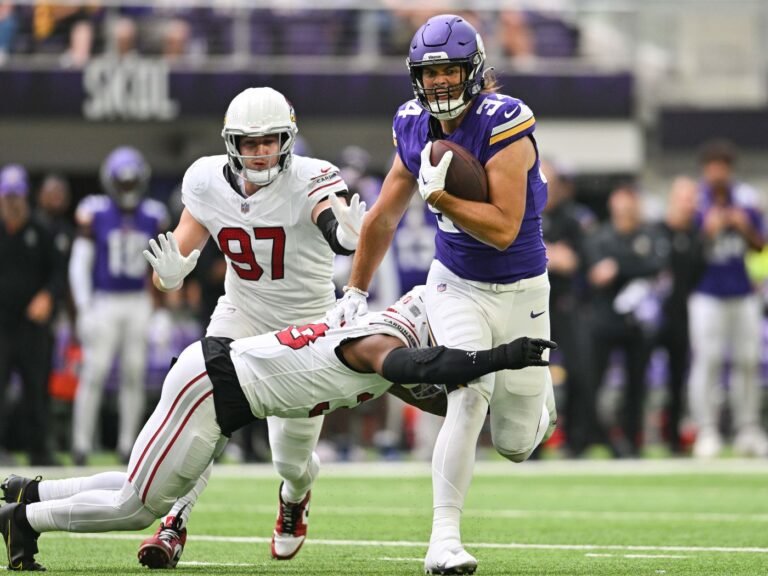
The clash between the Arizona Cardinals and the Minnesota Vikings was one for the books, a game defined by strategic plays, individual brilliance, and nail-biting moments. The matchup, which took place at U.S. Bank Stadium, saw the Vikings narrowly secure a 23-22 victory despite being outgained in total yards. This game highlighted not only the offensive and defensive strategies of both teams but also individual performances that made a significant difference in the outcome.
Team Performance Overview
The Arizona Cardinals dominated in terms of total offense, accumulating 406 yards compared to the Vikings’ 273 yards. Arizona controlled the clock effectively, holding possession for nearly 36 minutes, while Minnesota possessed the ball for just over 24 minutes. Despite this, turnovers and critical mistakes in the red zone kept Arizona from converting their yardage advantage into points. Minnesota, on the other hand, capitalized on fewer opportunities but executed them flawlessly, particularly in the fourth quarter, highlighting the importance of efficiency and clutch play over sheer statistics.
Arizona struggled slightly in the red zone, settling for field goals when touchdowns were necessary. The Vikings, conversely, maximized their scoring opportunities, making their limited possessions count. This efficiency ultimately tipped the scales in favor of the home team.
Key Player Performances: Arizona Cardinals
Quarterback Kyler Murray was the centerpiece of the Cardinals’ offense. He completed 31 of 45 passes for 260 yards, adding 1 touchdown but also throwing 2 costly interceptions. Murray’s mobility was on display, as he rushed 7 times for 48 yards, trying to extend plays and create opportunities for his team. However, the interceptions late in the game were a turning point, allowing the Vikings to seize momentum.
Running back James Conner contributed significantly with 17 carries for 68 yards, averaging just over 4 yards per attempt. While he consistently gained yardage, he was unable to reach the end zone, reflecting the Cardinals’ struggles in converting yardage into scoring opportunities.
Tight end Trey McBride was a standout, catching 12 passes for 96 yards. His high volume of receptions highlighted his reliability as a target for Murray and demonstrated his pivotal role in keeping the Cardinals’ offense moving. McBride’s performance was particularly impressive considering the team’s struggles in other areas.
Wide receiver Marvin Harrison Jr. also contributed with a 15-yard touchdown, helping the Cardinals gain the lead during the second half. However, despite their offensive yardage, the Cardinals could not sustain drives at the most critical moments.
Key Player Performances: Minnesota Vikings
For the Vikings, quarterback Sam Darnold led an efficient and composed offense. Completing 21 of 31 passes for 235 yards, Darnold threw 2 touchdowns without any interceptions. Despite being sacked multiple times, he managed to direct a game-winning drive in the final minutes, demonstrating poise under pressure.
Wide receiver Justin Jefferson was pivotal for Minnesota. With 7 catches for 99 yards, including a crucial 30-yard reception late in the fourth quarter, Jefferson helped set up the go-ahead score. His performance underscored his ability to deliver in high-pressure situations and maintain consistency throughout the season.
Tight end Johnny Mundt scored a 4-yard touchdown, giving Minnesota their first offensive touchdown of the game. His contribution, though modest in yardage, was essential in keeping the team competitive and in sync with Darnold’s passing strategy.
Running back Aaron Jones capped the Vikings’ comeback with a 5-yard game-winning touchdown in the final minute. His timely execution reinforced the team’s strategy of relying on key players during critical moments.
Defensively, Minnesota was opportunistic. Pressure on Murray led to crucial turnovers, including an interception that played a decisive role in sealing the victory. The defense’s ability to perform under pressure offset the Cardinals’ yardage advantage and exemplified the importance of situational football.
Match Analysis
Several factors contributed to the Vikings’ victory despite being statistically outgained:
- Clutch Fourth Quarter Execution: Minnesota’s final drive, converting key downs under pressure, illustrated their ability to perform when it mattered most.
- Red Zone Efficiency: The Vikings capitalized on limited opportunities, whereas Arizona struggled to turn yardage into points.
- Turnover Management: Arizona’s late interceptions allowed Minnesota to gain momentum, highlighting the importance of ball security.
The game emphasized that total yardage and possession time do not guarantee a win. Execution during critical moments, situational awareness, and minimizing mistakes often define the outcome.
Frequently Asked Questions (FAQs)
Q1: Who led the game in receiving yards?
- For the Vikings, Justin Jefferson had 99 yards, making him the top receiver.
- For the Cardinals, Trey McBride led with 96 yards, highlighting his pivotal role in the passing game.
Q2: How many total yards did Arizona gain compared to Minnesota?
- Arizona gained 406 total yards, significantly more than Minnesota’s 273 yards, but could not convert that advantage into a win.
Q3: Which players scored touchdowns?
- For Arizona: Marvin Harrison Jr. scored a touchdown.
- For Minnesota: Johnny Mundt and Aaron Jones each scored, with Jones’ score giving the Vikings the win.
Q4: How did the quarterbacks perform under pressure?
- Kyler Murray struggled slightly under pressure, throwing 2 interceptions.
- Sam Darnold, despite being sacked multiple times, executed a successful game-winning drive.
Q5: What was the turning point of the match?
- The game turned in the fourth quarter when Minnesota converted a key fourth down to Justin Jefferson, setting up the decisive touchdown by Aaron Jones.
Conclusion
The Arizona Cardinals vs Minnesota Vikings matchup was a classic example of how efficiency and execution can outweigh statistics. While Arizona dominated in yardage and possession, Minnesota’s strategic plays, clutch execution, and effective use of opportunities allowed them to secure a narrow but decisive victory. Individual performances, especially from Jefferson, Darnold, and McBride, showcased the skill and determination present on both sides, making this match a memorable contest for fans and analysts alike.
