


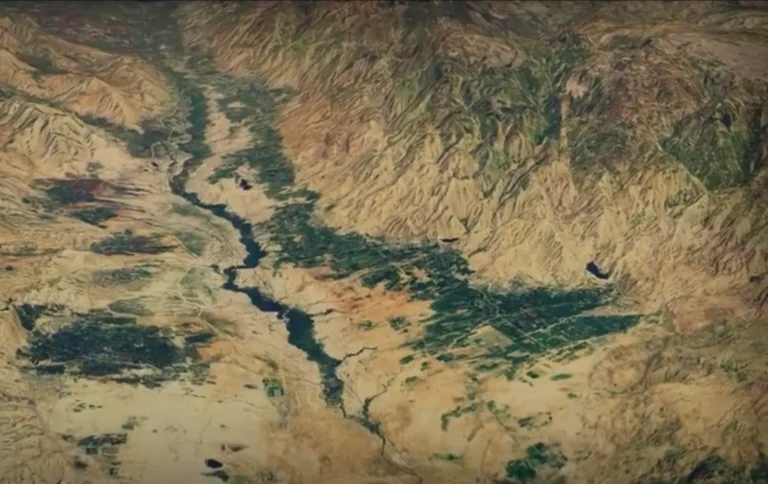
The Jordan River has been one of the most significant geographic, cultural, and spiritual landmarks in the Middle East for thousands of years. Whether studied for its biblical relevance, its geopolitical importance, or its environmental challenges, maps of the Jordan River help bring clarity to a river system that is both small in size yet enormous in meaning. Modern and historical maps allow scholars, travelers, and researchers to trace the river’s path, visualize its changing boundaries, and understand the complex regions it connects.
1. Where the Jordan River Begins
Most maps show that the Jordan River originates in northern Israel, fed by three primary tributaries: the Hasbani (from Lebanon), the Banias (from the Golan Heights), and the Dan (from Israel). These waters merge near the Hula Valley to form the upper Jordan River.
Maps indicate that the upper Jordan River flows southward into Lake Hula, which historically was a large wetland but was drained in the 1950s. Today, portions have been restored as a nature reserve, often highlighted on ecological or historical maps.
2. The River’s Course Through the Jordan Rift Valley
After leaving the Hula Valley, the river continues southward into Lake Tiberias, more commonly known as the Sea of Galilee. On most physical maps, the Sea of Galilee appears as a large freshwater lake in the northern part of the Jordan Rift Valley. It is here that the river becomes a critical freshwater source for surrounding communities.
Exiting the Sea of Galilee, the lower Jordan River begins its descent toward the Dead Sea. The river flows through a semi-arid valley that forms part of the broader Great Rift Valley, a geographic feature stretching from Lebanon to East Africa. Maps often highlight this valley’s steep escarpments and unique geological characteristics.
3. International Borders on Jordan River Maps
One of the reasons maps of the Jordan River are so widely referenced is due to the river’s role as a political boundary. Different sections of the Jordan River act as borders between:
- Israel and Jordan
- The West Bank and Jordan
Because of ongoing political sensitivities, various maps may reflect borders differently. Some use internationally recognized boundaries, while others reflect administrative or disputed lines. For travelers and students, comparing maps from different sources is useful to gain a fuller understanding of regional perspectives.
4. The Jordan River and the Dead Sea
Nearly all maps show the Jordan River emptying into the Dead Sea, the lowest point on Earth’s surface. However, many maps produced over the past century illustrate a shrinking shoreline. The Dead Sea’s rapid decline is largely due to reduced river flow, as the Jordan River has been heavily diverted for agriculture and domestic use.
Modern maps, especially satellite-based ones, typically reveal a fragmented northern basin and expanding sinkholes around the shoreline—issues that older maps do not show. This makes map comparison a valuable tool for understanding environmental changes.
5. Historical Maps of the Jordan River
Historical maps are essential for anyone studying biblical history, early Christianity, or ancient Middle Eastern civilizations. These maps often focus on:
- Roman-era roads and cities
- Biblical sites such as Bethany Beyond the Jordan, traditionally believed to be the location of Jesus’ baptism
- Ancient tribal territories of Israel and surrounding kingdoms
Such maps differ from modern ones not only in artistic style but also in geographical accuracy. Earlier maps were drawn from limited exploration and often reflect theological or cultural interpretations of the river rather than precise measurements.
6. Modern Digital Mapping Tools
Today, maps of the Jordan River are more accessible than ever. Tools like GIS platforms, satellite imagery, and interactive mapping services allow users to:
- View real-time water levels
- Track environmental changes
- Examine topographic details
- Compare historical and modern routes
Environmental scientists frequently use these maps to monitor river health, water flow, and biodiversity, while tourists use them to plan visits to sites such as the Baptism Site, Jericho, or the Sea of Galilee.
FAQs About Maps of the Jordan River
1. Why do different maps show different borders around the Jordan River?
Because the river lies in a politically complex region, boundaries may be depicted according to different political viewpoints. Some maps show internationally recognized borders, while others depict administrative boundaries or disputed lines.
2. Does the Jordan River still flow the same route as in ancient times?
The general route remains the same, but the river’s width, depth, and flow rate have changed significantly due to modern water diversion and environmental pressures.
3. What are the most important features to look for on a Jordan River map?
Key features include the river’s sources (Hasbani, Banias, Dan), the Sea of Galilee, the lower Jordan River, the Dead Sea, political boundaries, and major historical or biblical sites.
4. Are there environmental maps showing the decline of the Jordan River?
Yes. Many modern ecological and satellite-based maps document reduced flow, pollution levels, habitat loss, and the shrinking Dead Sea.
5. Can travelers use maps to visit sites along the Jordan River?
Absolutely. Modern maps—especially digital ones—help visitors locate the Baptism Site, national parks, hiking trails, and scenic viewpoints along both the Israeli and Jordanian sides of the river.
